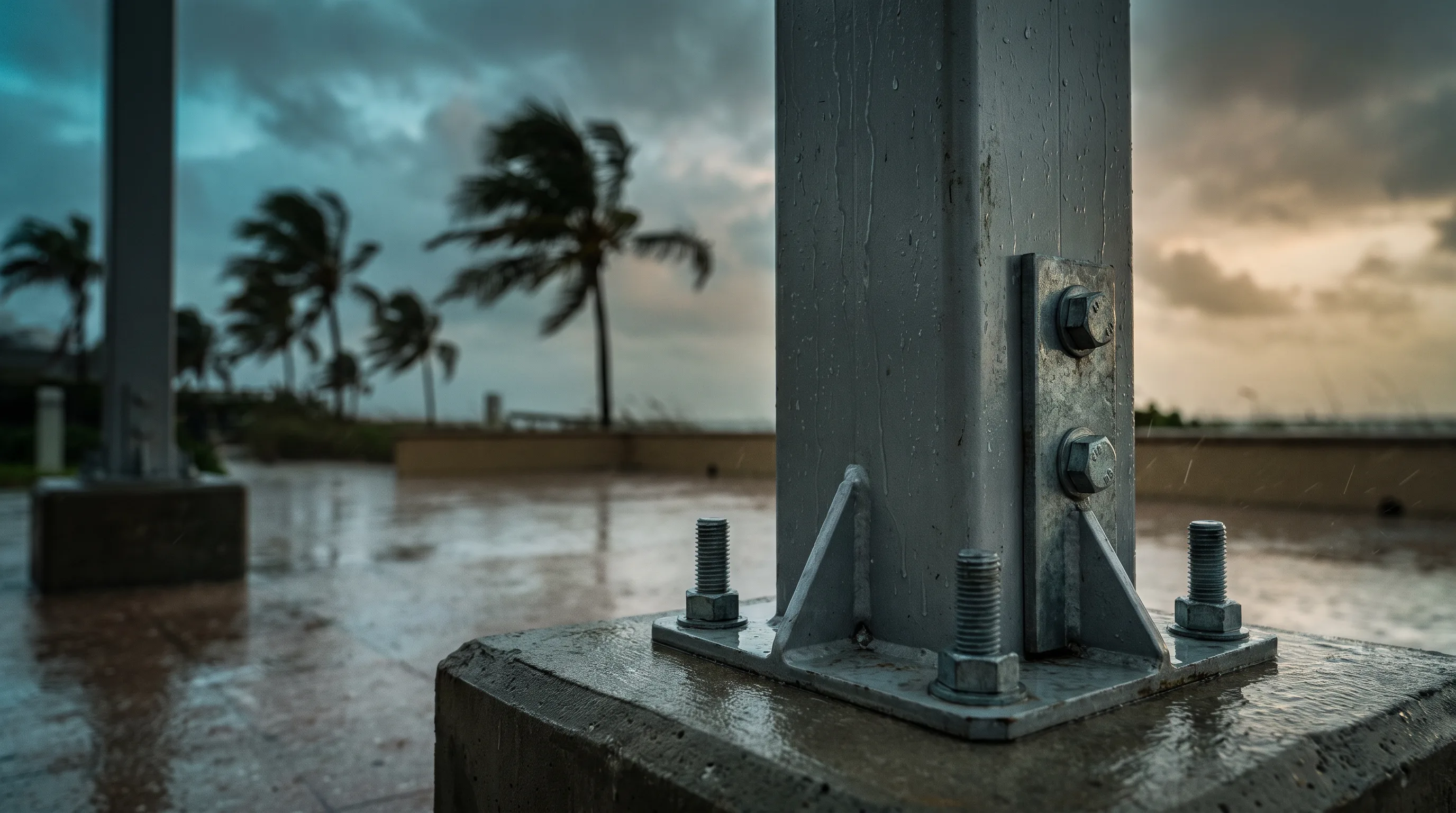
Pergola wind ratings and hurricane engineering
A hurricane-resistant pergola is one engineered and anchored to meet the specific design wind speed and exposure category required by Florida Building Code for your address — typically in the 170-195 mph range in South Florida — verified through sealed engineering drawings, proper footing depth, and code-compliant connection hardware.
"Hurricane-rated" gets thrown around loosely in outdoor-structure sales conversations. It should mean something specific and verifiable, not just a marketing phrase. Here's what actually goes into engineering a pergola to withstand South Florida wind.
Understanding wind speed ratings
The Florida Building Code assigns a "design wind speed" — an ultimate wind speed a structure must be engineered to resist — based on your location's risk category. South Florida's coastal and near-coastal zones generally fall in the 170-195 mph range, among the highest in the country, reflecting the region's hurricane exposure. Your exact number depends on your specific address, and only a structural engineer or a manufacturer's pre-engineered, site-verified system can confirm it precisely.
What "exposure category" adds to the calculation
Wind speed alone isn't the full picture. Florida Building Code also assigns an exposure category — broadly, how exposed your specific lot is to wind based on surrounding terrain:
- Exposure B — urban/suburban areas with surrounding structures that partially shield wind
- Exposure C — open terrain with scattered obstructions, common in many South Florida suburbs
- Exposure D — unobstructed areas facing open water, which see the highest effective wind loading
A waterfront or canal-front property in Exposure D needs a meaningfully stronger design than an identical-looking pergola set back in a tree-shielded Exposure B neighborhood — even at the same wind speed rating.
What actually makes a pergola structurally sound in high wind
1. Footing depth and mass
Concrete footings must be sized and reinforced to resist both the uplift and lateral forces wind places on a pergola roof — undersized footings are one of the most common failure points in poorly-built structures.
2. Post-to-footing and post-to-beam connections
Hurricane winds create significant uplift force, not just sideways push. Engineered connection hardware — not just screws or basic brackets — ties the roof structure down through the posts into the footings.
3. Beam spans and material gauge
Larger spans require thicker aluminum gauge or larger wood dimensional lumber to resist deflection and failure under wind load; this is precisely calculated, not estimated by eye.
4. Roof/louver attachment
On louvered systems, the slats and their drive mechanism must also be rated to stay attached (or fail safely) under design wind speed — a detail worth asking about directly when comparing louvered pergola brands.
A quick way to sanity-check a quote
Ask directly: "What design wind speed and exposure category are you engineering this for, and can I see the sealed drawings?" A legitimate contractor will have a specific, documented answer — not just "it's hurricane-rated."
How this connects to permitting
This engineering isn't optional paperwork — it's the technical basis your local building department reviews before issuing a permit. For a full walkthrough of that process, see our guide on pergola permits in Broward County, or visit our Miami-Dade County pergola installation page if you're closer to the coast, where exposure categories often run higher.
Frequently asked questions
What wind speed should a Florida pergola be rated for?
Most South Florida coastal areas fall in design wind speed zones of roughly 170-195 mph under the Florida Building Code, though your exact required rating depends on your specific location, exposure category, and the structure's height and geometry — an engineer calculates the precise figure for your site.
Can a pergola actually survive a hurricane?
A properly engineered and permitted pergola, anchored with footings sized for its wind zone, is designed to remain structurally attached through design-level hurricane winds, though homeowners in a storm's direct path are still generally advised to remove any lightweight attachments like curtains, screens, or string lights beforehand.
What is the difference between wind speed rating and wind exposure category?
Wind speed rating is the design velocity a structure must withstand, while exposure category (B, C, or D) describes how much surrounding terrain — buildings, trees, open water — affects wind loading at your specific site; both factor into the engineering calculation together.
Do I need an engineer to certify pergola wind resistance?
Yes, for a permitted permanent structure in Florida you need sealed engineering drawings — either from the pergola manufacturer's pre-engineered product line or a site-specific engineer — showing the structure meets the wind load required for your address.
Are aluminum pergolas stronger than wood in high wind?
Not inherently stronger pound-for-pound, but aluminum systems are generally easier to certify at high wind speeds because manufacturers provide pre-tested structural load data, while wood structures require more custom engineering to achieve comparable ratings.
Curious how different materials perform structurally and visually? Read our comparison of aluminum, wood, and louvered pergolas in Florida weather.
Get an engineered, permit-ready pergola design
Every Pergola Services install is engineered to the specific wind speed and exposure category for your address — not a generic template.