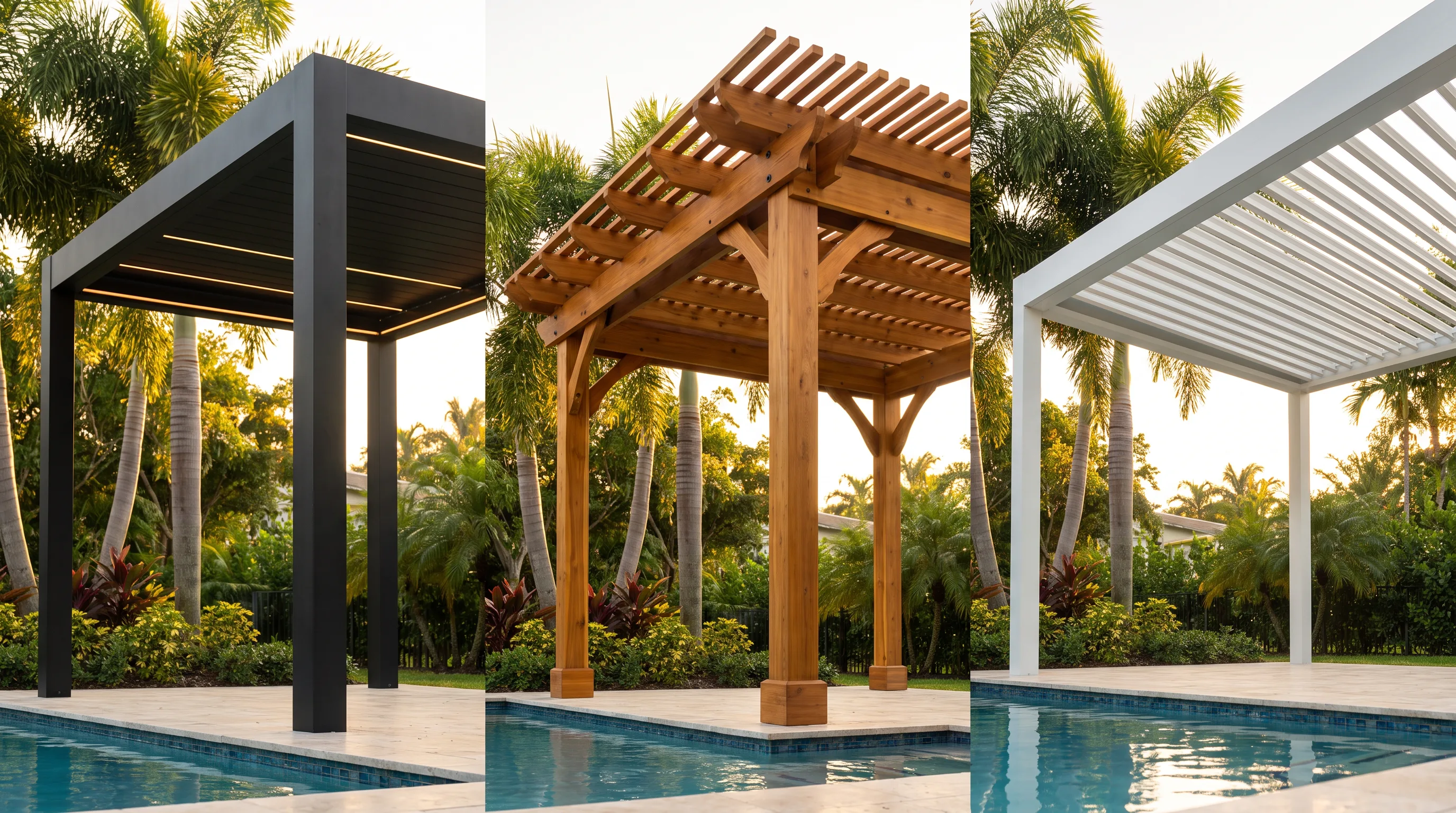
Pergola material comparison for Florida
Powder-coated aluminum generally holds up best in Florida's climate — it resists humidity, salt air, and UV fading with minimal upkeep. Wood offers a warmer look but needs resealing every 1-2 years to avoid rot. Motorized louvered aluminum adds weather-adaptive shade at a higher price point but the most functional versatility.
South Florida is uniquely hard on outdoor structures: relentless UV, near-constant humidity, salt-laden air within miles of the coast, and — several months a year — the possibility of hurricane-force wind. Material choice matters more here than almost anywhere else in the country. Here's how the three most common pergola materials actually perform.
Aluminum: the low-maintenance workhorse
Powder-coated aluminum is the material we install most often for a reason. It doesn't rot, rust (when properly coated), or attract termites, and a quality powder-coat finish resists UV fading for many years. Structurally, aluminum framing systems are also easier to certify against Florida Building Code wind loads because manufacturers typically provide pre-engineered structural data your contractor can reference directly.
Trade-offs: Aluminum has a more modern, linear aesthetic that doesn't suit every home style, and the upfront material cost sits above basic wood.
Wood: warmth at the cost of upkeep
Cedar and other rot-resistant hardwoods bring a traditional warmth that aluminum can't fully replicate, and for many South Florida homes with a coastal or Mediterranean architectural style, wood is the better visual fit. The catch is maintenance: humidity accelerates wood movement, and without resealing roughly every 1-2 years, you'll see graying, checking, or soft spots begin within just a few Florida summers.
Trade-offs: Lower upfront cost than aluminum in many cases, but higher lifetime cost once you factor in sealing, occasional board replacement, and closer inspection after storms.
Louvered roof pergolas: adaptive shade, at a price
Motorized louvered pergolas — almost always built on an aluminum frame — let you rotate the roof slats open or closed, or close them fully during a sudden Florida downpour, effectively turning the space into a covered room on demand. Many systems integrate rain sensors that close automatically, and LED lighting is commonly built into the beams.
Trade-offs: The motor, drive components, and electronics add meaningfully to both the purchase price and long-term maintenance compared to a fixed-roof structure — see our 2026 South Florida pergola cost guide for how that plays out in pricing.
Side-by-side comparison
| Factor | Aluminum (fixed) | Wood | Louvered (motorized) |
|---|---|---|---|
| Humidity/rot resistance | Excellent | Good, with upkeep | Excellent |
| Salt-air corrosion resistance | Excellent (coated) | Fair | Excellent (coated) |
| Maintenance frequency | Low | Every 1-2 years | Low, plus motor servicing |
| Wind-load engineering | Straightforward | Requires careful detailing | Straightforward |
| Rain protection | Partial (fixed slats) | Partial (fixed slats) | Full when closed |
| Relative upfront cost | $$ | $$–$$$ | $$$–$$$$ |
How to choose for your property
- Coastal or near-coastal home: lean aluminum for corrosion resistance
- Traditional or Mediterranean architecture: wood may fit the aesthetic better, if you're comfortable with upkeep
- Frequent outdoor entertaining through rainy season: louvered pays for itself in usable days
- Poolside installs near chlorine and splash: aluminum or sealed hardwood, not untreated softwood
Frequently asked questions
What is the best pergola material for Florida?
Powder-coated aluminum is generally the best all-around pergola material for Florida because it resists corrosion from humidity and salt air, requires little maintenance, and can be engineered for high wind loads without the upkeep wood requires.
Does wood rot quickly in South Florida humidity?
Untreated or poorly maintained wood can show rot, warping, and insect damage within a few years in South Florida's humidity, but properly sealed hardwoods like cedar or ipe with regular resealing every 1-2 years can last well over a decade.
Are louvered roof pergolas worth it in Florida?
For homeowners who want adjustable shade, rain protection without going inside, and a premium look, motorized louvered pergolas are generally worth the added cost — they function as an extra outdoor room during Florida's rainy season.
Which pergola material is most hurricane-resistant?
Engineered aluminum systems, including louvered models, are typically the most straightforward to certify for high wind loads because manufacturers provide pre-tested structural data, though any material can be engineered to code with the right footings and connections.
Do aluminum pergolas get too hot to touch in Florida sun?
Powder-coated aluminum framing can get warm in direct sun but is not typically uncomfortable to touch briefly; the roof or louver surface, not the structural frame, is where most heat buildup occurs, and light colors reduce this further.
Whichever material you choose, it still needs to clear your local wind-load requirements — see our companion guide on hurricane-proofing your pergola and understanding wind ratings, or check the specific rules for your area on our Palm Beach County pergola installation page.
Not sure which material is right for your home?
We'll walk your property, talk through your architecture and how you use your backyard, and recommend the material that actually fits — not just the one we want to sell.